
For too long, we’ve focused on leaders who have impressive skills and technical expertise but lack integrity and a sense of responsibility. Time and again, we’ve seen failures in leadership across every sector—from politics and finance to sports and technology. This isn’t a problem of poor strategy or a lack of knowledge; it’s a crisis of character.
We need to produce leaders who are not just effective but also good. This idea—that great leadership is rooted in virtue—is far from new. It’s a foundational principle that has been discussed by thinkers for centuries. Yet, in the last century, we began to separate “facts” from “values,” pushing virtues and character to the sidelines of public life.
This trend is reversing. We’re beginning to understand that character is not a soft skill but a critical component of a flourishing life. Virtues like justice, courage, and kindness are at the heart of our well-being. Good character doesn’t just help individuals; it strengthens the institutions that support our society—from schools and businesses to governments and community organizations. For these institutions to truly contribute to the greater good, they need leaders with strong character.

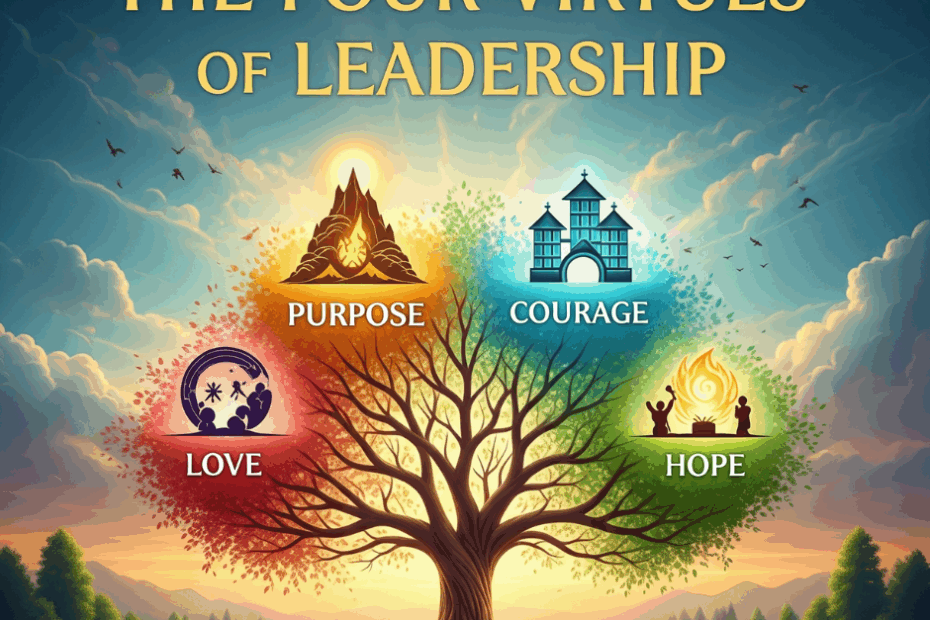
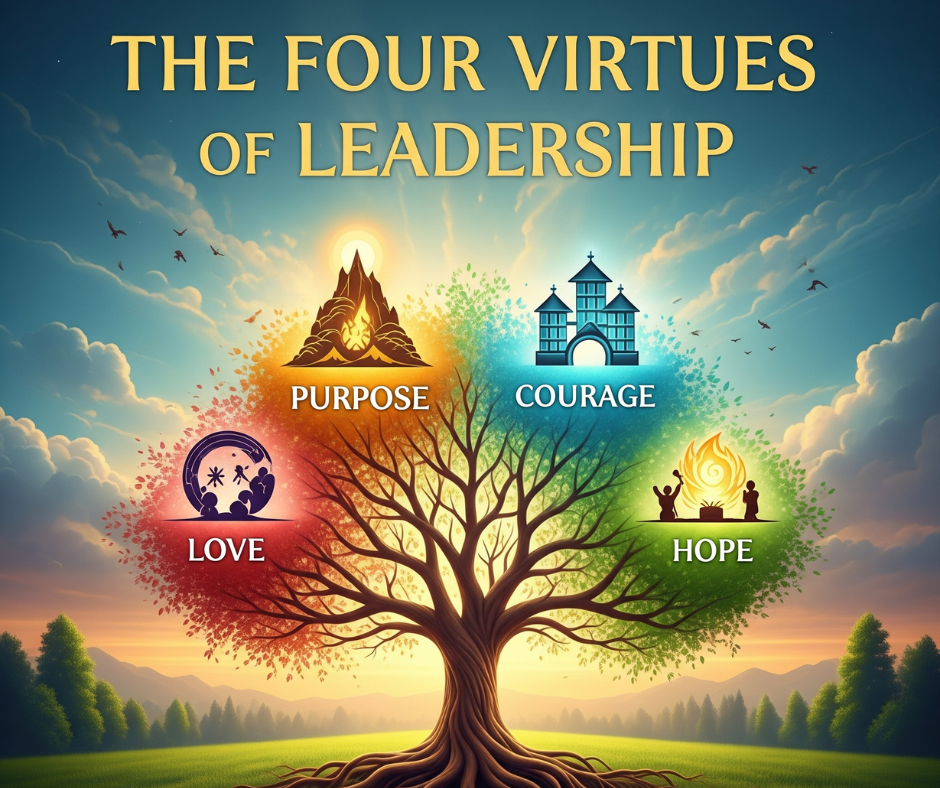
The Four Virtues of Leadership
Our work over the last decade has focused on advancing character-based leadership. We’ve developed a course, “Leading with Character,” that highlights four key virtues that can make a profound difference in a leader’s performance and impact on society. If leaders were to cultivate these virtues, even by a small amount, the effect would be significant.
Purpose
A sense of purpose is more than just having a goal; it’s a long-term commitment to a mission that is meaningful to you and beneficial to others. A leader with purpose can inspire their team, align their strategy with their values, and work toward goals that serve the common good. We’ve found that by helping people reflect on their values and strengths, they can clarify their sense of purpose and lead with greater vision and direction.
Courage
Leadership is full of tough decisions and risks. Without courage, leaders may shrink from the actions needed to build a better world. Courage is the ability to act on your values even when it’s difficult, uncomfortable, or scary. This doesn’t mean you have to be loud or bold; it means taking the small, everyday steps toward doing what’s right. It’s the effort toward goodness that truly defines courage.
Love
The word love is rarely used in a leadership context, but it should be. In leadership, love is a commitment to the well-being of others. It creates an environment of security, trust, and collaboration. Leading with love means putting others’ interests before your own, seeing the best in people, and acting with kindness even when making hard choices. It’s about creating an atmosphere where people feel seen, heard, and empowered.
Hope
Hope is more than just simple optimism; it’s a focused belief in the possibility of a good future, especially when facing challenges and uncertainty. Leaders are “dealers in hope,” and they have the power to cultivate it in their organizations and communities through the stories they tell and the examples they set. Hope is a muscle that gets stronger with practice, empowering leaders to continually work toward a better future.
Good Leadership for a Better World
While leaders certainly need skills in strategy, communication, and management, these competencies are elevated when they are guided by virtue. Leading with purpose, courage, love, and hope transforms technical expertise into a force for good.
The greatest challenges of our time require leaders who excel in both competence and character. We are committed to building a new generation of leaders who embody these virtues, and we are working to expand our reach to support people at Oxford and around the world. We believe that by focusing on character, we can create a better world for everyone.