Hello and welcome. In this issue, I want to share a key insight I’ve been exploring: the crucial role emotional intelligence (EI) plays in the success of coaching—and what happens when it’s absent. I’ll walk you through a practical framework I use, a quick exercise to try, and my own reflections on how this approach can transform a leader and their team.
The Insight: Coaching with Heart
Executive coaching, in my experience, is far more than a simple leadership tool. It’s a profound, transformative journey that can dramatically boost engagement and performance. But for it to truly work, it must be deeply rooted in emotional intelligence. Without that foundation, coaching can fall flat, leaving leaders stuck in old habits and their teams feeling disengaged. It’s the difference between temporary behavior changes and lasting, authentic growth.
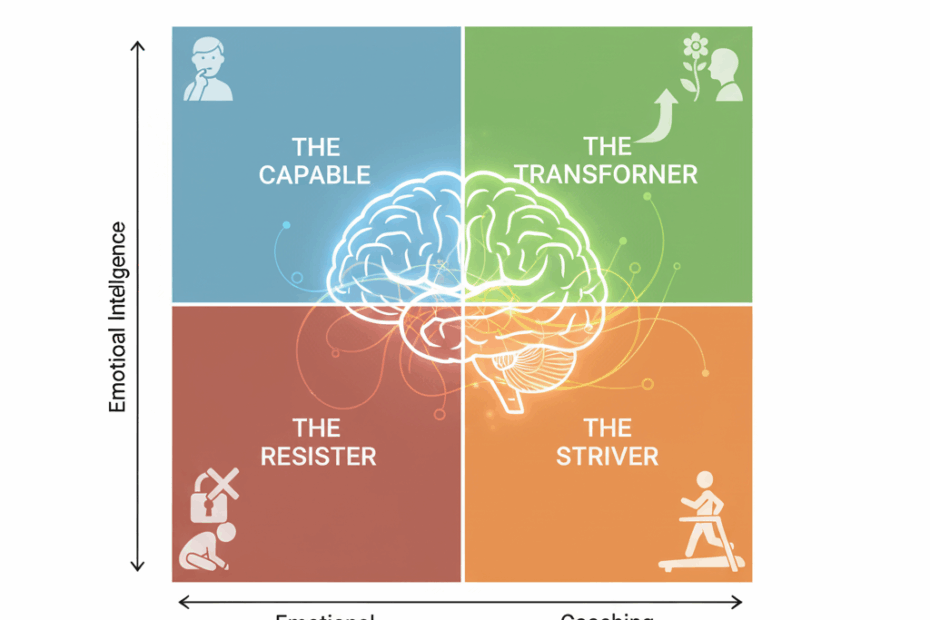
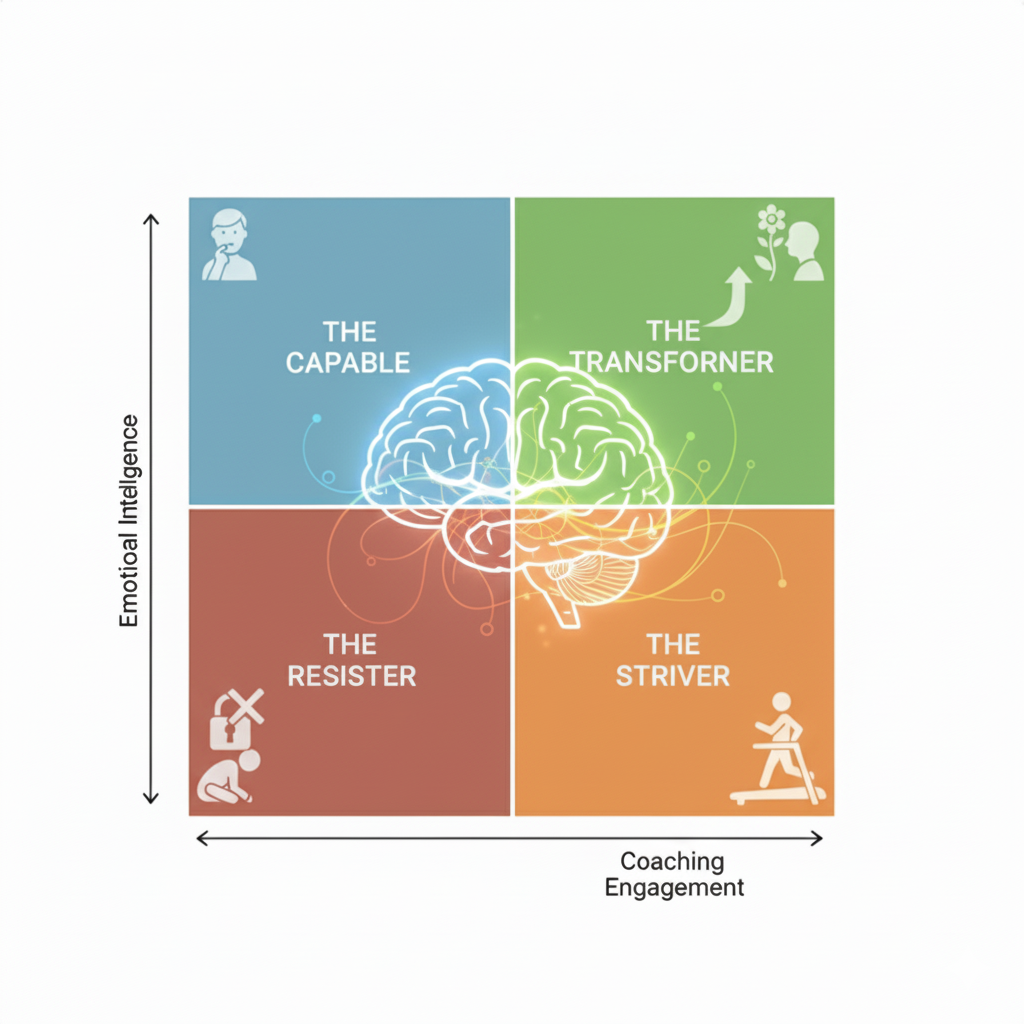
When I begin a coaching engagement, I find it incredibly helpful to visualize where a leader falls on a simple 2×2 matrix that crosses their Emotional Intelligence (from low to high) with their Coaching Engagement (from low to high). This isn’t about boxing people in, but about creating a roadmap for our work together.

Here are the four leader archetypes I’ve come to recognize:
- The Resister: Found in the low EI, low engagement quadrant, this leader is often the most challenging. They lack self-awareness and are skeptical of the entire process. They see coaching as a chore, not an opportunity. Their resistance isn’t just passive; it actively blocks progress and, over time, can erode the trust of those around them. My work with them starts with building a foundation of trust before we can even begin to talk about growth.
- The Striver: This leader is eager to engage with coaching, sitting in the low EI, high engagement quadrant. They work hard and are committed to change, but their efforts often lack depth. They might focus on tactical improvements without ever addressing the underlying emotional blind spots. The result is change that feels superficial and doesn’t last. For these leaders, our focus is on cultivating deeper self-awareness and understanding the “why” behind their actions.
- The Capable: The Capable leader is a fascinating case—they are highly emotionally intelligent but sit in the high EI, low engagement quadrant. They have all the right tools: empathy, strong self-awareness, and a natural ability to connect with people. Yet, for one reason or another, they are unmotivated to apply these skills to a coaching program. They are a source of untapped potential, and my role is to help them discover the “spark” or the personal goal that will ignite their commitment.
- The Transformer: This is the ideal. In the high EI, high engagement quadrant, these leaders are dedicated to their own growth and possess a deep well of emotional intelligence. They are open, adaptable, and use coaching to drive not just their own success, but the success of their entire team. They understand that their own development is inextricably linked to the health of their organization, and they lead with empathy and purpose.
This framework is a guide, helping me to maximize the impact of my coaching. A Resister needs to build trust first, a Striver needs to develop emotional intelligence, and a Capable needs a motivational push. A Transformer, on the other hand, is ready to dive deep and achieve truly lasting change.
To put this into practice, I begin each engagement by assessing where a leader currently sits on this matrix. From there, we create a tailored coaching plan. We might start with workshops to build self-awareness or focus on specific skills like active listening. The goal is always to cultivate the behaviors of a Transformer and, in doing so, help the leader build a thriving, collaborative, and successful culture for their team. It’s a powerful shift that begins from within.